When a woman decides she is ready to start a family, her focus naturally shifts toward improving her health and preparing her body for pregnancy. One of the first questions many women ask is:
“What should I eat to improve fertility?”
While there is no single “fertility food” that guarantees pregnancy, the foods you eat every day can significantly influence hormonal balance, ovulation, energy levels, digestion, and overall reproductive health.
Ayurveda has long emphasized the importance of preparing the body before conception. In fact, traditional Ayurvedic texts describe preconception care as an essential step in creating the healthiest possible environment for both conception and pregnancy.
Rather than viewing fertility as only a reproductive issue, Ayurveda sees it as a reflection of overall physical, mental, and emotional well-being.
Why Nutrition Matters Before Pregnancy
Many women begin focusing on nutrition only after becoming pregnant. Ayurveda takes a different approach. The months before conception are considered equally important because they help prepare the body, nourish reproductive tissues, and support healthy ovulation.
A well-planned fertility diet may help support:
- Hormonal balance
- Menstrual regularity
- Healthy ovulation
- Energy levels
- Digestive health
- Reproductive wellness
- Overall vitality
This is one reason Ayurvedic fertility programs often place significant emphasis on diet and lifestyle even before active conception attempts begin.
Understanding Fertility Through Ayurveda
According to Ayurveda, successful conception depends upon four essential factors:
- Beeja : Healthy sperm and ovum.
- Kshetra : A healthy uterus and reproductive system capable of supporting pregnancy.
- Ambu : Adequate nourishment throughout the body.
- Ritu : The appropriate fertile period and timing of conception.
Among these four factors, nutrition plays a direct role in supporting both Ambu and Beeja. Simply put, the body can only build healthy reproductive tissues when it receives proper nourishment.
The Importance of Strong Digestion (Agni)
One of the unique aspects of Ayurveda is that it does not focus only on what you eat. It also focuses on how well your body digests and absorbs food. According to Ayurvedic principles, even the healthiest foods may not provide optimal benefits if digestion is weak.
Strong Agni (digestive fire) helps:
- Absorb nutrients efficiently
- Support metabolism
- Nourish reproductive tissues
- Reduce accumulation of Ama (metabolic toxins)
This is why fertility nutrition in Ayurveda begins with digestive health.
Choose Freshly Prepared Foods Whenever Possible
Ayurveda generally recommends freshly cooked meals over highly processed or packaged foods. Fresh meals are considered easier to digest and more nourishing for the body’s tissues.
Helpful options include:
- Homemade vegetable soups
- Khichdi
- Freshly cooked dals
- Steamed vegetables
- Rice
- Millets
- Seasonal preparations
Many women notice improvements in digestion and energy levels simply by reducing processed foods and increasing freshly prepared meals.
Fertility-Nourishing Foods in Ayurveda
Certain foods have traditionally been valued for supporting reproductive health and vitality.
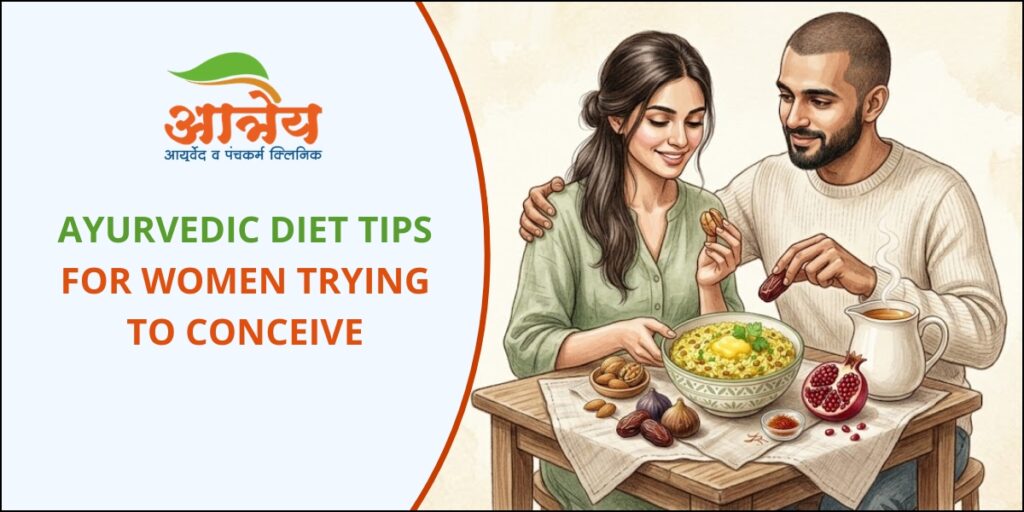
- Pure Cow’s Ghee : Ghee is regarded as one of Ayurveda’s most nourishing foods. It supports digestion, tissue nourishment, and overall vitality when consumed appropriately.
- Soaked Almonds and Walnuts : These provide healthy fats and nutrients that support overall wellness.
- Dates and Figs : Naturally rich in minerals and energy, these foods are commonly included in fertility-supportive dietary plans.
- Sesame Seeds : Sesame seeds are traditionally valued for their nourishing and Vata-balancing properties.
- Pumpkin Seeds : A nutritious addition to fertility-focused diets due to their mineral content.
- Pomegranate : Often regarded as one of the most beneficial fruits for reproductive wellness in Ayurveda.
- Warm Milk with Saffron : Traditionally consumed as part of preconception and fertility-supportive routines.
- Black Gram (Urad Dal) : Classical Ayurvedic texts frequently describe black gram as a nourishing food that supports strength and reproductive health.
Support Hormonal Balance Naturally
Hormonal balance is influenced by multiple factors, including nutrition, sleep, stress, and physical activity. Ayurveda encourages a balanced diet rich in:
- Seasonal fruits
- Seasonal vegetables
- Whole grains
- Healthy fats
- Freshly prepared meals
Digestive spices such as:
- Turmeric
- Cumin
- Fennel
- Coriander
- Ginger
are traditionally used to support digestion and metabolic balance.
Foods That May Not Support Fertility
While occasional indulgences are unlikely to affect fertility significantly, habitual dietary patterns matter.
Ayurveda generally advises limiting:
- Processed foods
- Refined sugars
- Excessive caffeine
- Soft drinks
- Deep-fried foods
- Artificial sweeteners
- Excessively cold foods and beverages
Reducing these foods may help support metabolic and reproductive health.
Why Healthy Weight Matters
Both low body weight and excessive weight can affect reproductive function.
Women struggling with weight-related fertility challenges may experience:
- Irregular periods
- Delayed ovulation
- Hormonal imbalance
A balanced Ayurvedic diet, combined with regular movement, yoga, and healthy sleep habits, can support long-term wellness.
Stress and Fertility: An Often Overlooked Connection
Many women focus entirely on food while overlooking the role of stress. Yet emotional well-being can influence hormonal health, menstrual regularity, and reproductive function.
Ayurveda strongly emphasizes:
- Adequate sleep
- Meditation
- Pranayama
- Gentle yoga
- Consistent daily routines
A calm mind and nourished body often work together to support fertility.
A Sample Ayurvedic Fertility Diet Plan
Early Morning
- Warm water
- A few soaked raisins
- Soaked almonds
Breakfast
- Vegetable poha
- Moong dal chilla
- Herbal tea
Mid-Morning
- Seasonal fruit
- Pomegranate
Lunch
- Rice or millet
- Dal
- Cooked vegetables
- Small amount of ghee
Evening
- Herbal tea
- Roasted seeds
Dinner
- Khichdi
- Vegetable soup
- Steamed vegetables
Before Bed
- Warm milk with a pinch of saffron
This sample plan provides general guidance. Individual dietary recommendations should always be personalized.
When Should You Seek Professional Fertility Guidance?
If you are experiencing:
- PCOS
- Irregular menstrual cycles
- Low AMH
- Endometriosis
- Thyroid disorders
- Recurrent pregnancy loss
- Difficulty conceiving despite regular attempts
It may be beneficial to seek professional fertility evaluation. Both Ayurvedic assessment and appropriate medical investigation can help identify factors that may be influencing conception.
Preparing for Pregnancy Through Ayurveda
One of Ayurveda’s greatest strengths is its emphasis on preparation. Rather than waiting until fertility challenges develop, Ayurveda encourages women to build a strong foundation before conception through:
- Nutritious food
- Healthy digestion
- Balanced lifestyle habits
- Stress management
- Reproductive nourishment
This philosophy forms the basis of traditional preconception care and Beej Sanskar programs.
Personalized Fertility Care at Aatreya Ayurved and Panchakarma Clinic, Hadapsar, Pune
At Aatreya Ayurved and Panchakarma Clinic, Pune, fertility care extends beyond simply treating symptoms.
Women planning pregnancy, struggling with infertility, managing PCOS, low ovarian reserve, hormonal imbalances, or irregular cycles receive individualized guidance based on Ayurvedic principles and their unique health profile.
Our fertility-focused approach may include:
- Detailed Ayurvedic consultation
- Personalized fertility diet planning
- Lifestyle recommendations
- Panchakarma therapies when appropriate
- Stress-management strategies
- Fertility-supportive Ayurvedic formulations
The goal is to help create the healthiest possible environment for natural conception and reproductive wellness.
Frequently Asked Questions
Which Ayurvedic foods are best for fertility?
Ghee, soaked almonds, walnuts, sesame seeds, pumpkin seeds, dates, figs, pomegranate, saffron milk, and black gram are traditionally valued for reproductive nourishment.
Can Ayurveda help women with PCOS conceive naturally?
Ayurveda may support women with PCOS through personalized dietary guidance, lifestyle modification, and therapies aimed at supporting hormonal balance and ovulation.
How long should I follow a fertility-supportive Ayurvedic diet?
Many practitioners recommend beginning fertility-focused dietary and lifestyle practices at least three months before planned conception.
Is Panchakarma beneficial before pregnancy?
In selected cases, fertility-focused Panchakarma therapies may be recommended to support overall health and reproductive wellness before conception.
Which foods should be limited while trying to conceive?
Processed foods, excess sugar, excessive caffeine, deep-fried foods, soft drinks, artificial sweeteners, and highly processed snacks are generally discouraged.
Recent Posts
-
 Ritucharya in Ayurveda: Why Should Diet and Lifestyle Change With the Seasons?
 -
 केस गळणे वाढले आहे? Hair Fall कमी करण्यासाठी Ayurveda मध्ये काय Approach आहे?
 -
 पंचकर्म के बाद शरीर में क्या बदलाव महसूस हो सकते हैं
 -
 Basti Therapy in Ayurveda: What is it Used For?
 -
 चुकीच्या आहारामुळे शरीरातील दोषांचे संतुलन कसे बिघडते?