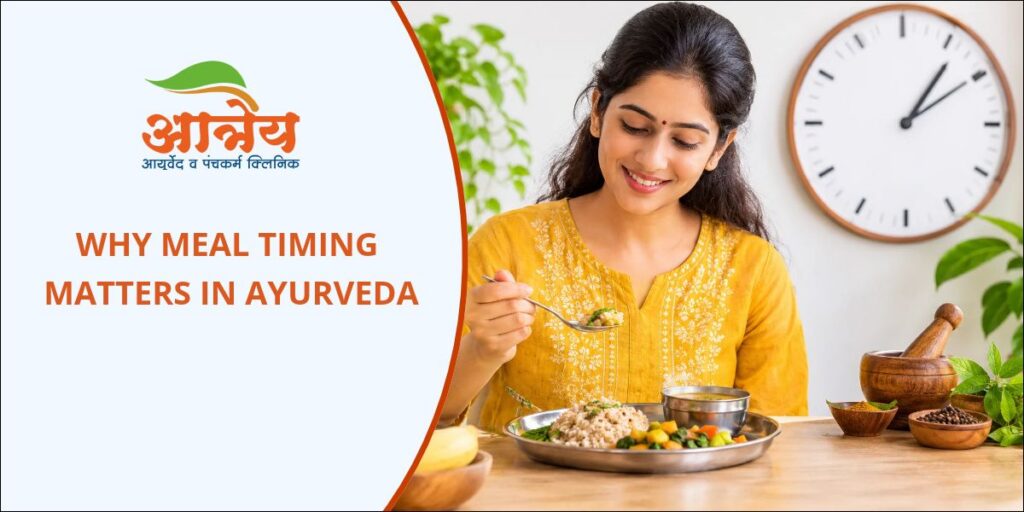
Eating healthy food is important for good health. We often focus on what we eat, how much we eat, and whether our food is nutritious. But have you ever thought about when you eat your food? According to Ayurveda, meal timing is just as important as food quality. Eating healthy food at the wrong time may affect digestion and overall well-being.
Ayurveda, the traditional Indian system of healing, gives great importance to digestion. It explains that our body follows a natural daily rhythm, and our digestive system works differently at different times of the day. Eating according to this natural rhythm may help support better digestion and overall health.
This is why Ayurveda does not focus only on what you eat. It also considers when you eat, how much you eat, and how your body responds to food.
Understand why meal timing matters in Ayurveda and how you can build healthier eating habits.
1. Why Does Ayurveda Give Importance to Meal Timing?
In Ayurveda, digestion is connected to a concept called Agni, which means digestive fire. Agni is responsible for breaking down food and helping the body use nutrients.
According to Ayurvedic principles, healthy Agni supports proper digestion, while weak or irregular Agni may contribute to digestive discomfort.
Eating at irregular times, skipping meals frequently, or eating very late at night may disturb your normal eating routine.
For example:
- Eating breakfast very late may affect your daily eating schedule.
- Skipping lunch may lead to excessive hunger later.
- Eating a heavy dinner late at night may cause discomfort before bedtime.
- Frequent snacking may make it difficult to recognise natural hunger signals.
Ayurveda encourages eating at regular times so the digestive system can follow a predictable routine.
2. Is What You Eat Enough for Good Health?
Eating nutritious food is important, but it is not the only factor that supports good digestion.
Imagine eating a healthy meal filled with vegetables, whole grains, and protein. These foods provide important nutrients. However, if you eat too quickly, eat when you are not hungry, or have a very heavy meal just before sleeping, you may experience digestive discomfort.
Ayurveda considers several factors when it comes to healthy eating:
- Food quality: Choose fresh, clean, and nutritious food.
- Meal timing: Eat at regular times according to your daily routine.
- Food quantity: Avoid overeating and eat according to your appetite.
- Eating habits: Chew your food properly and eat without rushing.
- Digestive capacity: Consider how comfortably your body digests different foods.
Therefore, healthy eating is not just about choosing the right ingredients. Your eating habits also matter.
3. Why Is Lunch Considered the Main Meal in Ayurveda?
One of the important Ayurvedic eating principles is having your main meal around midday.
According to Ayurveda, digestive strength is generally considered stronger around noon, when the sun is at its highest point. This is associated with stronger digestive Agni.
For this reason, Ayurveda traditionally recommends having a nutritious and satisfying lunch.
A balanced lunch may include:
- Rice or whole wheat roti
- Dal or other protein-rich foods
- Seasonal vegetables
- A small portion of healthy fats
- Suitable spices that support flavour and digestion
Eating a balanced lunch can help provide energy for the rest of the day. However, your meal size should also depend on your appetite, activity level, health conditions, and individual digestive needs.
4. What Is the Best Time to Eat Breakfast?
Breakfast is the first major meal for many people after a night of sleep. Ayurveda encourages eating according to your hunger and daily routine rather than following a strict clock. Some people feel hungry soon after waking up, while others may need some time before eating.
A healthy breakfast can include:
- Vegetable poha
- Upma
- Moong dal chilla
- Vegetable oats
- Idli with suitable accompaniments
- Seasonal fruits, depending on individual needs
Try to avoid skipping breakfast regularly if it leads to excessive hunger or overeating later in the day.
The goal is to maintain a balanced routine that suits your body’s needs.
5. Why Should You Avoid Eating Dinner Very Late?
Late-night eating is a common habit, especially among people with busy work schedules.
However, Ayurveda generally recommends having dinner earlier and keeping it lighter than lunch.
Eating a very heavy meal close to bedtime may cause problems such as:
- Feeling too full before sleeping
- Bloating and gas
- Acidity or heartburn in some people
- Discomfort during sleep
A simple dinner may include vegetable khichdi, dal with rice, lightly cooked vegetables, or other easily tolerated foods.
Try to finish dinner around 2–3 hours before bedtime, if your schedule allows.
This gives you some time to digest your food before going to sleep.
People with medical conditions or specific dietary requirements should follow personalised advice from their healthcare professional.
6. How Does Irregular Meal Timing Affect Digestion?
Your body benefits from a consistent daily routine. Eating at very different times every day may make it harder to maintain regular hunger and fullness patterns.
Some common habits that may affect digestion include:
- Skipping Meals : Skipping meals may lead to excessive hunger later, which can increase the chances of overeating.
- Eating Too Frequently : Eating continuously without recognising hunger may make it difficult to understand your body’s natural appetite signals.
- Eating Too Quickly : When you eat in a hurry, you may not chew your food properly. This can contribute to digestive discomfort.
- Late-Night Snacking : Frequent snacking late at night may disturb your regular eating schedule and add unnecessary calories.
- Eating During Stress : Stress can affect digestion and appetite. Eating while distracted or feeling stressed may also lead to unhealthy eating habits.
Ayurveda encourages mindful eating, regular meal schedules, and awareness of your body’s digestive needs.
7. What Is the Role of Doshas in Meal Timing?
Ayurveda describes three main doshas: Vata, Pitta, and Kapha. These are traditional concepts used to understand different body and mind patterns.
Each dosha has different characteristics, and Ayurvedic dietary recommendations may vary according to an individual’s constitution and current imbalance.
Vata Dosha
Vata is associated with movement, dryness, and irregularity. Ayurvedic recommendations for Vata often focus on warm, freshly prepared meals and regular eating times.
Pitta Dosha
Pitta is associated with heat and transformation. People with a Pitta-dominant constitution may benefit from avoiding long gaps between meals and choosing foods suitable for their individual needs.
Kapha Dosha
Kapha is associated with stability and heaviness. Ayurvedic recommendations may include lighter meals, appropriate portions, and avoiding unnecessary snacking.
It is important to understand that these are traditional Ayurvedic principles. Dosha-based food recommendations should be personalized rather than followed as strict rules.
8. Simple Ayurvedic Tips to Improve Your Meal Timing
You do not need to make major changes to your lifestyle to develop better eating habits. Small and consistent steps can make a difference.
Here are some simple tips:
- Follow a regular eating schedule: Try to eat your meals at similar times every day.
- Do not ignore hunger: Avoid unnecessarily delaying meals when you feel hungry.
- Make lunch balanced: Include vegetables, protein, and suitable carbohydrates.
- Keep dinner light: Avoid very heavy meals close to bedtime.
- Eat slowly: Chew your food properly instead of rushing through meals.
- Avoid unnecessary snacking: Eat when you feel hungry rather than eating out of boredom.
- Stay hydrated: Drink enough water throughout the day according to your needs.
- Eat mindfully: Avoid distractions such as mobile phones and television while eating.
Remember, the aim is not to follow a perfect schedule every day. It is to develop a healthy and sustainable routine.
9. When Should You Consult an Ayurvedic Doctor?
If you regularly experience digestive discomfort, bloating, acidity, constipation, irregular appetite, or heaviness after meals, it is important to understand the underlying cause.
An Ayurvedic doctor can assess your individual health needs, lifestyle, eating habits, and digestive patterns before suggesting suitable dietary or treatment recommendations.
Ayurvedic treatment may include personalised dietary guidance, lifestyle changes, and other therapies depending on your health condition.
However, persistent or severe digestive symptoms should not be ignored. Medical evaluation may be necessary to identify conditions that require specific treatment.
Conclusion
Healthy eating is not only about choosing nutritious food. When you eat, how much you eat, and how you eat also play an important role in your daily routine.
Ayurveda highlights the importance of regular meal timing, proper digestion, mindful eating, and understanding individual body needs. Following simple habits such as eating lunch on time, avoiding heavy late-night meals, and maintaining a consistent eating schedule can help support overall digestive health.
Instead of making sudden changes, start with small steps and build a routine that works for your lifestyle.
Visit Aatreya Ayurved & Panchkarma Clinic in Hadapsar
If you are looking for Ayurvedic guidance to improve your digestion and develop healthier eating habits, Aatreya Ayurved & Panchkarma Clinic in Hadapsar, Pune, can help you understand the importance of personalised Ayurvedic care. The clinic focuses on traditional Ayurvedic principles, individual health needs, dietary guidance, and Panchakarma therapies. Whether you want to understand your digestive health, learn about Ayurvedic lifestyle practices, or explore suitable Ayurvedic treatment options, consulting an Ayurvedic doctor can help you make informed decisions. Visit Aatreya Ayurved & Panchkarma Clinic in Hadapsar for personalised Ayurvedic guidance and a healthier lifestyle.
Frequently Asked Questions (FAQs)
Why is meal timing important in Ayurveda?
Ayurveda considers regular meal timing important for maintaining digestive Agni and supporting healthy digestion.
What is the best time to eat lunch according to Ayurveda?
Ayurveda traditionally recommends eating lunch around midday when digestive Agni is considered stronger.
Is eating dinner late at night harmful?
Eating heavy meals close to bedtime may cause bloating, acidity, and digestive discomfort in some people.
Does Ayurveda recommend eating breakfast every day?
Ayurveda encourages eating according to natural hunger and maintaining a regular daily eating routine.
Can meal timing improve digestion?
Following regular meal timings, eating suitable portions, and avoiding overeating may help support better digestive habits.
Recent Posts
-
 Why Meal Timing Matters in Ayurveda
-
 Stress और Anxiety में क्या फर्क है? Ayurveda कहाँ मदद कर सकता है?
-
 Sperm Quality वर Lifestyle चा किती परिणाम होतो? आयुर्वेद काय सांगतो?
-
 Ritucharya in Ayurveda: Why Should Diet and Lifestyle Change With the Seasons?
-
 केस गळणे वाढले आहे? Hair Fall कमी करण्यासाठी Ayurveda मध्ये काय Approach आहे?