





In male infertility reports, one term that frequently causes concern is “low sperm motility.” Many couples understand sperm count, but motility is often confusing. In clinical practice, it is common to see reports where:
- Sperm count is adequate
- But motility is reduced
And couples ask: “Doctor, what does this mean for conception?”
To understand this properly, it is important to look beyond numbers and understand the underlying causes.
What Is Sperm Motility?
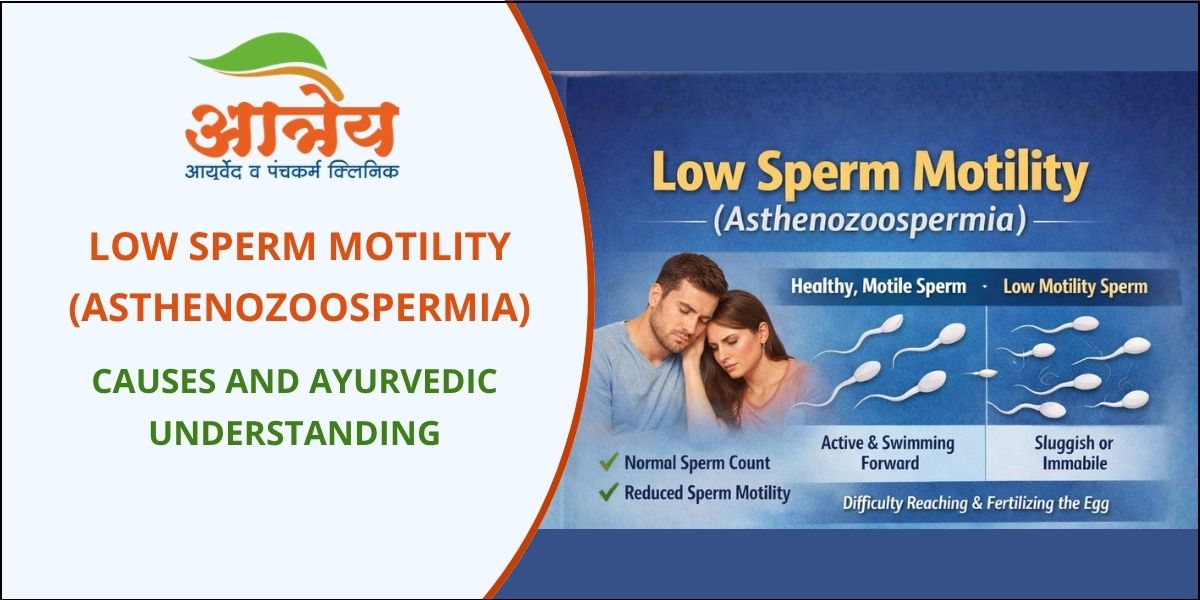
Sperm motility refers to the ability of sperm to move efficiently. For natural conception:
- Sperm must travel through the female reproductive tract
- Reach the egg
- Successfully fertilize it
If movement is slow or ineffective, the chances of fertilization may reduce.
Types of Motility Issues
Reports usually classify motility as:
- Progressive motility (forward movement)
- Non-progressive motility
- Immotile sperm
Reduced progressive motility is usually the main concern in fertility.
Common Causes of Low Sperm Motility
From both modern and clinical observation, several factors may contribute:
1. Lifestyle Factors
- Sedentary routine
- Lack of physical activity
- Excessive screen time
2. Heat Exposure
- Prolonged laptop use on lap
- Tight clothing
- Frequent sauna or hot environments
3. Stress and Sleep Disturbance
Chronic stress may affect hormonal balance and energy levels.
4. Poor Digestion and Nutrition
Weak digestion may affect tissue nourishment, including reproductive tissues.
5. Toxin Exposure
Environmental toxins, smoking, alcohol, and processed food can influence sperm quality.
Ayurvedic Understanding of Sperm Motility
In Ayurveda, sperm motility can be understood through the concept of:
Shukra Dhatu Quality and Vata Balance
- Shukra Dhatu → determines reproductive strength
- Vata Dosha → governs movement and function
When Vata is disturbed:
- Movement becomes irregular
- Function becomes weak
This may be reflected as reduced sperm motility.
Role of Digestion (Agni) in Sperm Quality
Ayurveda emphasizes that all tissues, including Shukra Dhatu, are formed from proper digestion.
When Agni is weak:
- Nutrient conversion is incomplete
- Tissue nourishment becomes poor
- Reproductive strength reduces
This is why improving digestion is often a key step.
Signs That May Be Associated
Apart from reports, some associated patterns may be seen:
- Low energy levels
- Fatigue
- Stress
- Irregular routine
- Digestive discomfort
These may indicate underlying imbalance.
Ayurvedic Approach to Supporting Sperm Motility
The approach focuses on improving overall balance rather than targeting symptoms alone.
- Supporting Digestion : Improves nutrient absorption and tissue formation.
- Balancing Vata : Helps improve movement and functional efficiency.
- Reducing Ama : Clearing metabolic waste supports internal environment.
- Improving Lifestyle : Regular routine, sleep, and activity support hormonal balance.
- Strengthening Shukra Dhatu : Through nourishment and balanced living.
Role of Beej Sanskar in Male Fertility
Beej Sanskar includes preparation of both partners.
For men, it focuses on:
- Improving sperm vitality
- Supporting systemic health
- Creating a favorable internal environment
This becomes important when reports show reduced motility.
Low sperm motility is a common but manageable concern when approached holistically. Rather than focusing only on numbers, understanding digestion, lifestyle, and overall balance provides a more comprehensive perspective. Ayurveda emphasizes gradual improvement in internal health, which supports reproductive function over time.
If you have been diagnosed with low sperm motility or are planning pregnancy, you may consult Aatreya Ayurved & Panchakarma Clinic, Hadapsar, Pune, or call 9860007992 for personalized Ayurvedic guidance through a structured Beej Sanskar program.
Consultation is based on individual health assessment and suitability.
Frequently Asked Questions (FAQs)
- What is sperm motility?
It refers to the ability of sperm to move efficiently toward the egg.
- Can low motility affect fertility?
Yes. Poor movement can reduce the chances of fertilization.
- What causes low sperm motility?
Common causes include lifestyle factors, stress, heat exposure, and poor digestion.
- Can Ayurveda help improve motility?
Ayurveda focuses on digestion, lifestyle, and tissue nourishment to support reproductive health.
- Is low motility reversible?
In many cases, improvement may be possible with consistent lifestyle and holistic support.