




When discussing male infertility, most attention is given to sperm count and motility. However, in clinical practice, another parameter often goes unnoticed — semen viscosity. Many patients bring reports showing terms like “increased viscosity” or “thick semen,” but are unsure of its significance. A common question asked is: “Doctor, everything else is normal, then why is this mentioned?”
Understanding this factor is important because semen quality is not just about numbers — it is also about its physical properties.
What Is Semen Viscosity?
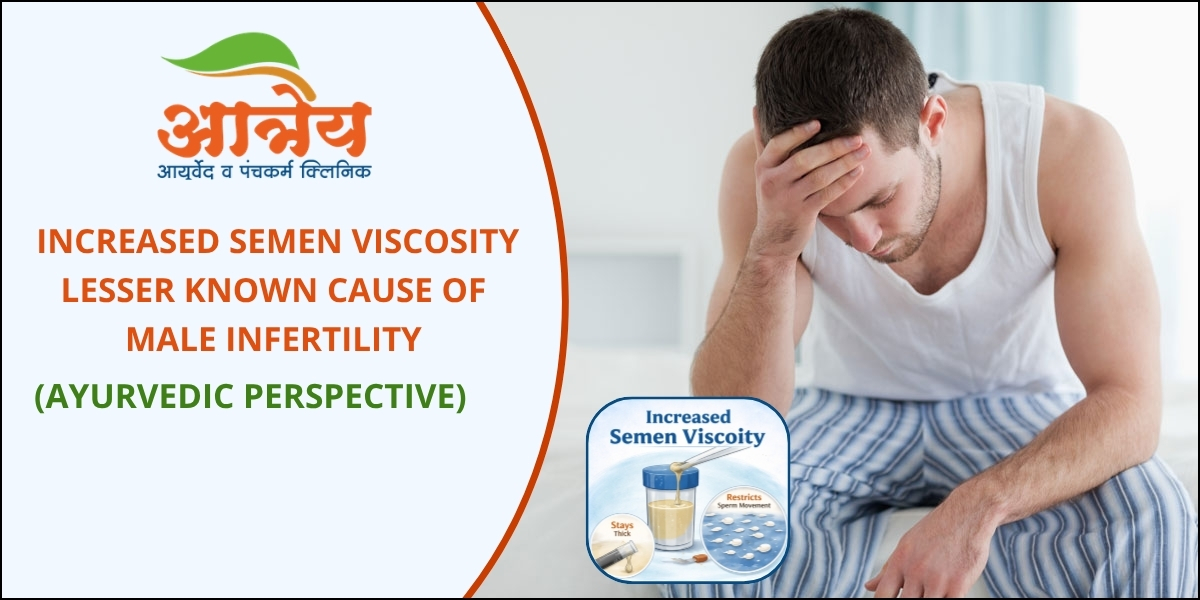
Semen viscosity refers to the thickness or fluidity of semen.
Normally:
- Semen is initially slightly thick
- It liquefies within a short time after ejaculation
When viscosity is increased:
- Semen remains thick for longer
- Liquefaction is delayed or incomplete
This can affect the natural movement of sperm.
Why Does Viscosity Matter in Fertility?
For successful fertilization:
- Sperm need to move freely
- They must travel through the female reproductive tract
When semen is excessively thick:
- Sperm movement becomes restricted
- Progressive motility may reduce
- Chances of reaching the egg may decrease
Thus, even with normal count, fertility may be affected.
Common Causes of Increased Viscosity
From clinical observation, several factors may contribute:
- Poor Hydration : Low water intake can influence fluid balance in the body.
- Infection or Inflammation : Sometimes underlying infections may affect semen properties.
- Lifestyle Factors
- Sedentary routine
- Irregular sleep
- Excess stress
- Poor Diet and Digestion : Heavy, oily, or processed food may affect metabolic balance.
- Accumulation of Metabolic Waste : This connects closely with Ayurvedic concepts.
Ayurvedic Understanding of Semen Thickness
In Ayurveda, semen quality is linked to:
- Shukra Dhatu (reproductive tissue)
- Kapha Dosha (structure and fluidity)
- Agni (digestion)
- Ama (toxins)
Increased viscosity can be understood as:
- Kapha aggravation : Leading to heaviness and thickness.
- Ama accumulation : Causing stickiness and obstruction in channels.
- Weak Agni : Leading to improper formation of tissues.
How Ama Affects Semen Quality
As discussed earlier, Ama is a key factor in many disorders.
In this context, Ama may:
- Increase thickness of body fluids
- Reduce clarity and quality of Shukra Dhatu
- Obstruct normal movement
This is why digestion correction becomes important even in male infertility.
Associated Patterns Seen in Patients
In practice, men with increased viscosity may also show:
- Sluggish digestion
- Heaviness in body
- Low physical activity
- Irregular routine
- Stress or fatigue
These patterns indicate systemic imbalance rather than a local issue.
Ayurvedic Approach to Supporting Semen Quality
The approach focuses on improving overall balance:
- Improving Digestion (Agni) : Supports proper tissue formation.
- Reducing Ama : Helps clear metabolic obstruction.
- Balancing Kapha : Improves fluid consistency and function.
- Supporting Shukra Dhatu : Enhances reproductive tissue quality.
- Correcting Lifestyle : Routine, hydration, and activity play an important role.
Role of Beej Sanskar in Male Preparation
Beej Sanskar includes preparation of both partners. For men, it focuses on:
- Improving sperm and semen quality
- Supporting systemic balance
- Creating a favorable internal environment
This becomes especially relevant in subtle issues like viscosity.
Male infertility is not always about sperm count alone. Factors like semen viscosity can also influence fertility outcomes. Understanding these parameters from a broader perspective helps in addressing the root cause. Ayurveda emphasizes digestion, lifestyle, and internal balance as key factors in improving reproductive health.
If your reports mention increased semen viscosity or you would like a deeper evaluation of male fertility from an Ayurvedic perspective, you may consult Aatreya Ayurved & Panchakarma Clinic, Hadapsar, Pune, or call 9860007992 for personalized guidance through a structured Beej Sanskar program.
Consultation is based on individual health assessment and suitability.
Frequently Asked Questions (FAQs)
- What is semen viscosity?
It refers to the thickness or fluidity of semen.
- Can thick semen affect fertility?
Yes. It may restrict sperm movement and reduce chances of fertilization.
- What causes increased viscosity?
Possible causes include poor hydration, lifestyle factors, digestion issues, and metabolic imbalance.
- Is it a serious condition?
It may affect fertility but can often be managed with proper guidance.
- Can Ayurveda help in such cases?
Ayurveda focuses on digestion, toxin reduction, and lifestyle correction to support reproductive health.