




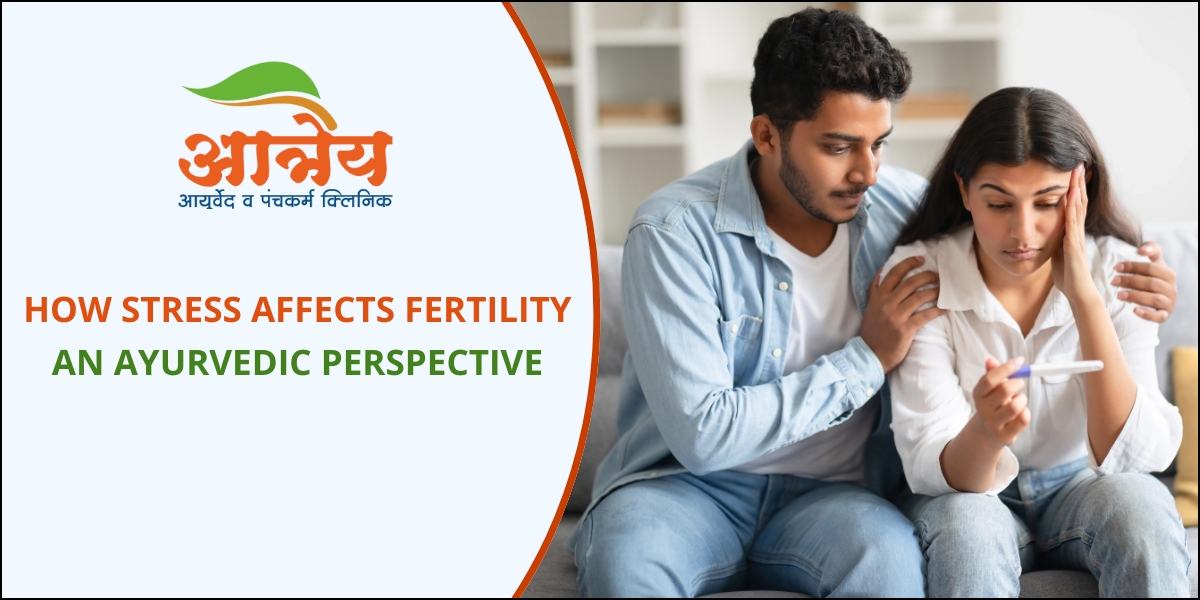
In today’s high-pressure lifestyle, stress has silently become one of the leading contributors to male infertility. Long work hours, mental tension, anxiety, and lifestyle imbalances can all interfere with the body’s natural reproductive ability.
Stress doesn’t just affect the mind—it directly impacts hormonal balance, sperm production, libido, and even the quality of Shukra Dhatu, which is the core of male reproductive health according to Ayurveda.
The good news is: Ayurveda offers holistic and natural ways to combat stress and restore fertility—not just symptomatically, but at the root cause.
How Stress Impacts Male Fertility: A Scientific + Ayurvedic View
Stress affects both the mind and body, leading to the following negative effects on male fertility:
- Hormonal Imbalance : Stress increases cortisol, a stress hormone that suppresses testosterone production—the hormone essential for sperm development.
- Poor Sperm Quality : Chronic stress is linked to lower sperm count, poor motility, and abnormal morphology, which affects the ability to conceive.
- Sexual Dysfunction : Mental stress often results in reduced libido, erectile issues, or premature ejaculation, all of which interfere with natural conception.
- Oxidative Stress : High stress generates free radicals, causing oxidative damage to sperm and reducing fertility potential.
Ayurvedic Insight: Role of Shukra & Ras Dhatu
In Ayurveda, fertility is governed by Shukra Dhatu—the essence tissue responsible for reproduction. But it doesn’t function alone. It is nourished by Ras Dhatu, the first tissue formed after digestion.
When a person experiences chronic stress or follows an irregular diet/lifestyle, Rasa gets depleted, eventually weakening Shukra.
Stress also increases Vata and Pitta doshas, disturbing hormonal balance, digestion, and emotional health—creating a full-body imbalance that affects conception.
Ayurvedic Solutions for Stress-Related Infertility
Ayurveda uses a multi-layered approach to help men manage stress and improve reproductive health through detox, rejuvenation, and lifestyle changes.
1. Mind-Body Detox with Panchakarma
Ayurveda recommends Panchakarma as the foundational therapy to purify the body and mind.
Especially useful:
- Shirodhara: Continuous oil flow on the forehead calms the nervous system and balances mental stress.
- Basti (medicated enema): Helps pacify Vata dosha, which controls the nervous system and reproductive channels.
These therapies not only reduce stress but also cleanse the body’s srotas (channels) for better nutrient absorption and Shukra formation.
2. Rasayana Chikitsa: Ayurvedic Rejuvenation for Mind & Reproductive System
Rather than using chemical supplements or quick-fix tonics, Ayurveda uses Rasayana Dravyas—herbs and formulations that rejuvenate the body deeply and naturally.
Here’s how Ayurvedic Rasayanas work:
- Medhya Rasayana – Nourishes the brain and nervous system, reduces anxiety, improves emotional strength, and promotes restful sleep.
- Vrushya Dravya – Strengthens and revitalizes Shukra Dhatu, enhances sperm quality, libido, and stamina.
- Balya & Ojovardhak Dravya – Boost physical energy, enhance immunity (Ojas), and help manage hormonal imbalances caused by stress.
These Rasayanas work together to improve resilience, detoxify, and restore fertility potential—without any side effects.
3. Ahara & Vihara: Food and Lifestyle Corrections
Ayurveda emphasizes correcting daily habits to restore balance:
Recommended Foods:
- Warm, nourishing, unctuous meals
- Ghee, milk, soaked dry fruits, dates, and seasonal fruits
- Rasayana-rich herbs in food form (under supervision)
Avoid:
- Overeating, processed/junk food, alcohol, smoking, excessive caffeine
- Late-night work and screen time
Recommended Practices:
- Anulom-Vilom & Bhramari Pranayama to calm the nervous system
- Gentle yoga asanas for reproductive health
- Following a Dinacharya (daily routine) to regulate sleep, digestion, and mood
Beej Sanskar – Our Holistic Ayurvedic Fertility Program
At Aatreya Ayurved & Panchakarma Clinic, we offer a specially curated Ayurvedic male fertility program called Beej Sanskar.
It is based on the principle of preparing the body, mind, and reproductive tissues before conception, just like preparing fertile soil before sowing seeds.
The BeejSanskar Program Includes:
- Panchakarma detox
- Shukra-nourishing Rasayanas
- Stress-reducing Medhya therapy
- Diet & lifestyle plan
- Personalised follow-ups
To know more or book a consultation, call: 9860007992
Conclusion: Reclaim Your Fertility, Naturally
If you’re trying to conceive and struggling with unexplained fertility issues, stress could be the silent culprit. Instead of suppressing symptoms, Ayurveda addresses the root cause, restoring balance to both the body and mind.
With therapies like Panchakarma, Rasayana Chikitsa, and guided lifestyle changes, Ayurveda empowers men to rebuild their reproductive strength, naturally and holistically.
