






Hormonal imbalance is one of the most common concerns among women and couples planning pregnancy.
Irregular periods, mood swings, acne, weight changes, and difficulty conceiving are often linked to hormonal disturbances.
In clinical practice, many patients come with a similar concern:
“Doctor, my hormones are not balanced.”
While modern reports focus on specific hormone levels, Ayurveda looks at a broader picture —
what is disturbing the body’s natural balance in the first place?
What Does “Hormonal Imbalance” Really Mean?
Hormones act as messengers that regulate various functions in the body, including:
- Menstrual cycle
- Ovulation
- Metabolism
- Mood and sleep
- Reproductive health
When this communication system becomes irregular, symptoms begin to appear.
However, Ayurveda does not view hormones as isolated entities.
It understands them as part of a larger network involving digestion, tissues, and Dosha balance.
Ayurvedic Perspective on Hormonal Balance
In Ayurveda, hormonal harmony depends on the balance of:
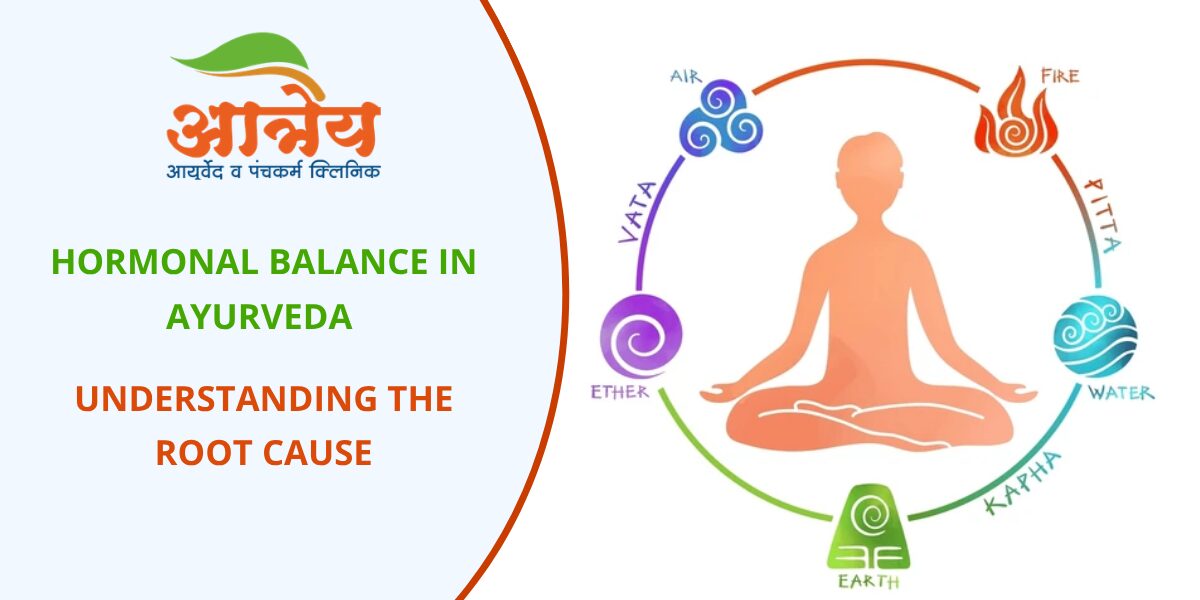
- Doshas (दोष)- (Vata, Pitta, Kapha)
- Agni (अग्नी )- (digestive strength)
- Dhatus (धातू) – (body tissues, especially Ras and Shukra)
- Manas (मन)- (mental health)
When these factors are balanced, hormonal function tends to remain stable.
When they are disturbed, symptoms begin to develop gradually.
Root Causes of Hormonal Imbalance
- Weak Digestion (Agni)
In many cases, the starting point is digestion.
When digestion is weak:
- Nutrient absorption is affected
- Tissue nourishment becomes inadequate
- Hormonal signals may become irregular
This is why Ayurveda often begins treatment by improving digestion.
- Ama (Metabolic Toxins)
Accumulation of Ama can disturb metabolic processes and Dosha balance.
Over time, this may:
- Affect menstrual rhythm
- Disturb ovulation
- Influence skin and weight
- Dosha Imbalance
Different Dosha imbalances may present differently:
- Vata imbalance → irregular cycles, anxiety
- Pitta imbalance → acne, heavy flow, irritability
- Kapha imbalance → weight gain, sluggish cycles
Understanding this helps in identifying the root cause rather than treating symptoms alone.
- Stress and Emotional Factors
Chronic stress is one of the most common modern contributors.
It may:
- Disturb sleep
- Affect appetite
- Influence hormonal rhythm
In Ayurveda, mental and physical health are closely connected.
- Irregular Lifestyle
Inconsistent daily habits such as:
- Late nights
- Skipping meals
- Excess screen time
- Sedentary routine
These patterns gradually disturb the body’s internal balance.
Common Signs of Hormonal Imbalance
Symptoms may vary, but commonly include:
- Irregular periods
- Acne or skin changes
- Weight fluctuations
- Hair fall
- Mood swings
- Fatigue
These are signals that the body’s internal regulation needs attention.
Why Treating Only Symptoms May Not Be Enough
In many cases, focusing only on symptoms may give temporary relief.
However, if the underlying imbalance remains, symptoms may return.
Ayurveda focuses on:
- Correcting digestion
- Reducing Ama
- Balancing Doshas
- Supporting tissue nourishment
- Stabilizing daily routine
This approach addresses the root cause rather than isolated symptoms.
A Holistic Approach to Hormonal Balance
Improving hormonal balance involves gradual and consistent changes:
- Regular sleep routine
- Balanced meals at fixed timings
- Stress management
- Moderate physical activity
- Supporting digestion
These factors together help restore the body’s natural rhythm.
Hormonal Balance and Fertility
For couples planning pregnancy, hormonal harmony plays a key role.
Balanced hormones support:
- Regular ovulation
- Healthy menstrual cycles
- Proper uterine environment
- Overall reproductive strength
This is why hormonal balance is an important part of Beej Sanskar preparation.
Conclusion
Hormonal imbalance is not a single problem with a single solution.
It reflects deeper disturbances in digestion, metabolism, lifestyle, and mental well-being.
Ayurveda focuses on identifying and correcting these root causes.
With a consistent and holistic approach, the body gradually regains its natural balance.
If you are experiencing symptoms of hormonal imbalance or planning pregnancy, a structured and personalized Beej Sanskar program can help address the root cause naturally.
You may consult Aatreya Ayurved & Panchakarma Clinic, Hadapsar, Pune, or call 9860007992 for expert Ayurvedic guidance based on individual assessment.
Consultation is based on individual health assessment and suitability.
Frequently Asked Questions (FAQs)
- What causes hormonal imbalance according to Ayurveda?
It is usually caused by imbalance in Doshas, weak digestion (Agni), and accumulation of Ama.
- Can hormonal imbalance affect fertility?
Yes. Hormonal imbalance may affect ovulation, menstrual cycles, and overall reproductive health.
- How does Ayurveda approach hormonal balance?
By improving digestion, reducing toxins, balancing Doshas, and correcting lifestyle habits.
- Is hormonal imbalance reversible?
In many cases, it can improve with consistent lifestyle and holistic Ayurvedic support.
- Does stress affect hormones?
Yes. Chronic stress can disturb hormonal rhythm and overall body balance.
