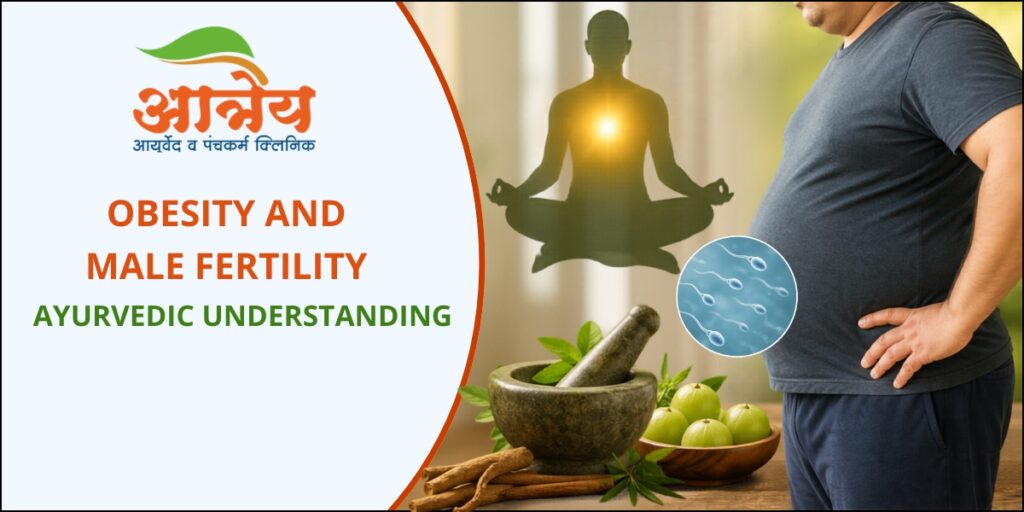
Weight gain is often discussed in the context of general health, but its impact on fertility is not always clearly understood. In clinical practice, it is quite common to meet men who say: “Doctor, my reports are mostly normal, but I have put on weight in the last few years.”
In many such cases, body weight is not just a cosmetic concern — it can influence hormonal balance, energy levels, and reproductive health. From an Ayurvedic perspective, obesity is not viewed as a single issue. It reflects deeper imbalances in digestion, metabolism, and lifestyle, all of which can affect fertility over time.
Must Read Article : Sleep and Fertility – Why Night Routine Matters for Conception
How Obesity Can Affect Male Fertility
Male fertility depends on more than just sperm count. It involves a combination of:
- Hormonal balance
- Sperm quality and motility
- Metabolic health
- Overall vitality
Excess body weight can influence these factors in several ways.
1. Hormonal Imbalance
Increased body fat may affect hormonal regulation. This may lead to:
- Reduced testosterone levels
- Disturbance in reproductive hormones
- Altered sperm production
Such changes can impact fertility potential even when basic reports appear acceptable.
2. Increased Heat and Inflammation
Excess body weight is often associated with internal heat and low-grade inflammation. From an Ayurvedic viewpoint, this reflects Pitta and Kapha imbalance, which may affect tissue quality, including reproductive tissues.
3. Reduced Sperm Quality
Obesity has been associated with:
- Reduced sperm motility
- Altered sperm morphology
- Reduced vitality
These changes may not always be immediately obvious but can affect conception over time.
4. Poor Circulation and Energy Levels
A sedentary lifestyle often accompanies weight gain. This may:
- Affect blood circulation
- Reduce physical stamina
- Lower overall vitality
These factors contribute indirectly to reproductive health.
Ayurvedic Perspective on Obesity (Sthoulya-स्थौल्य)
In Ayurveda, obesity is referred to as Sthoulya(स्थौल्य) and is mainly associated with Kapha Dosha imbalance and weak metabolic function. Key contributing factors include:
- Accumulation of Ama (metabolic toxins)
- Sedentary lifestyle
- Improper dietary habits
When metabolism becomes sluggish, tissues are not formed optimally, including Shukra Dhatu (reproductive tissue).
The Link Between Digestion and Fertility
Ayurveda places strong emphasis on digestion.
When digestion is impaired:
- Nutrient absorption becomes inefficient
- Tissue nourishment declines
- Metabolic waste accumulates
This directly affects reproductive strength. In many patients, correcting digestion becomes the first step toward improving overall health.
Common Patterns Seen in Clinical Practice
Some commonly observed patterns include:
- Gradual weight gain over years
- Irregular eating habits
- Late-night routines
- Low physical activity
- Digestive discomfort
- Fatigue
These patterns often coexist and contribute to metabolic imbalance.
Ayurvedic Approach to Supporting Fertility in Obesity
Ayurveda focuses on gradual and sustainable correction. The approach includes:
- Improving Digestion (Agni) : Restoring digestive strength helps improve metabolism and tissue formation.
- Reducing Ama : Clearing metabolic toxins supports better internal balance.
- Balancing Kapha : Helps improve metabolism and reduce heaviness.
- Supporting Lifestyle Changes
- Regular physical activity
- Consistent routine
- Balanced sleep
- Strengthening Shukra Dhatu : Improving overall health supports reproductive tissue quality.
Role of Beej Sanskar in Such Cases
Beej Sanskar preparation becomes especially relevant in men with metabolic imbalance.
It focuses on:
- Improving overall health
- Correcting digestion and metabolism
- Supporting reproductive strength
Rather than focusing only on symptoms, it aims at preparing the body holistically.
Practical Perspective
Weight loss is often approached with urgency, but Ayurveda emphasizes:
- Gradual correction
- Sustainable habits
- Consistent routine
Even small improvements in daily habits can contribute to better health over time.
Obesity is not just a matter of weight — it reflects deeper metabolic and lifestyle imbalances. These imbalances can influence hormonal health, energy levels, and reproductive function. Ayurveda focuses on addressing the root cause through digestion, lifestyle, and overall balance, supporting long-term well-being.
If you are planning parenthood and would like to understand how weight, metabolism, and lifestyle influence male fertility, you may consult Aatreya Ayurved & Panchakarma Clinic, Hadapsar, Pune, or call 9860007992 for personalized guidance through a structured Beej Sanskar program.
Consultation is based on individual health assessment and suitability.
Frequently Asked Questions (FAQs)
1. Can obesity affect male fertility?
Yes. It may influence hormonal balance, sperm quality, and overall health.
2. Does weight loss improve fertility?
In many cases, improving lifestyle and reducing excess weight may support better reproductive health.
3. How does Ayurveda view obesity?
As a result of Kapha imbalance, weak digestion, and metabolic dysfunction.
4. Is digestion related to fertility?
Yes. Proper digestion supports tissue nourishment, including reproductive tissues.
5. Can Ayurveda help in such cases?
Ayurveda focuses on lifestyle, digestion, and overall balance to support health.
Recent Posts
-
 Ritucharya in Ayurveda: Why Should Diet and Lifestyle Change With the Seasons?
 -
 केस गळणे वाढले आहे? Hair Fall कमी करण्यासाठी Ayurveda मध्ये काय Approach आहे?
 -
 पंचकर्म के बाद शरीर में क्या बदलाव महसूस हो सकते हैं
 -
 Basti Therapy in Ayurveda: What is it Used For?
 -
 चुकीच्या आहारामुळे शरीरातील दोषांचे संतुलन कसे बिघडते?