






When couples face difficulty conceiving, attention usually goes toward hormones, ovulation, or medical reports. However, Ayurveda often begins the discussion from a different point — digestion and metabolic health.
In many consultations, couples are surprised to hear that fertility preparation may start with improving digestion and clearing metabolic waste from the body. In Ayurvedic understanding, this waste is referred to as Ama — a concept that plays a significant role in overall health, including reproductive function.
What Is Ama (आम) in Ayurveda?
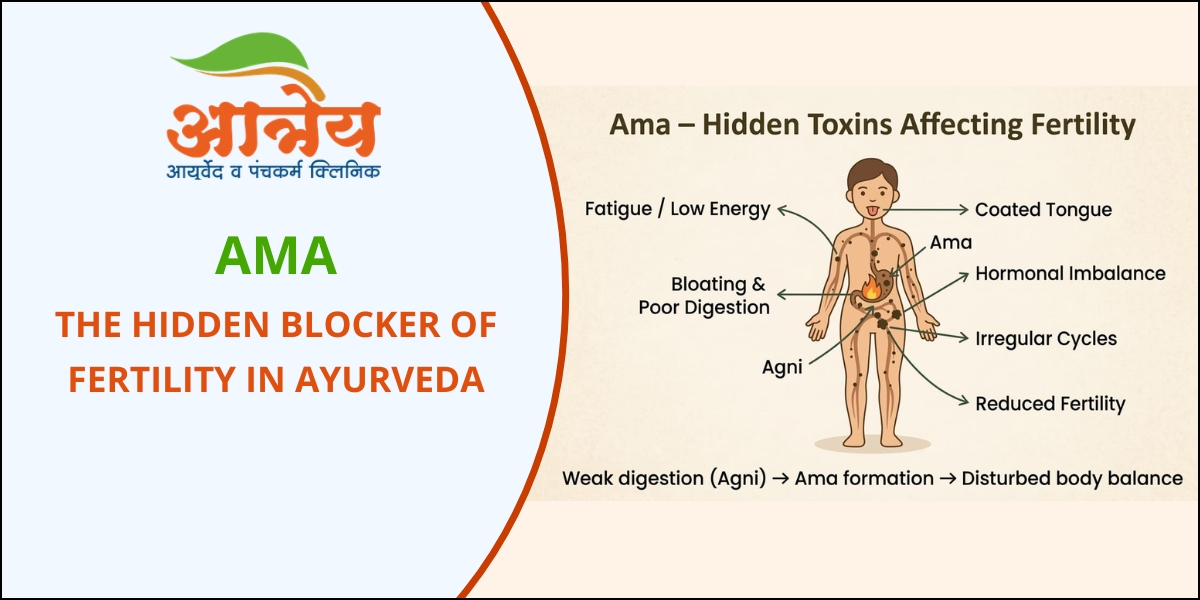
Ama is a term used in Ayurveda to describe incompletely digested metabolic waste that accumulates in the body when digestion is weak. When food is not properly digested and metabolized, it can lead to the formation of substances that interfere with normal physiological processes.
Over time, Ama may:
- Disturb tissue nourishment
- Block microchannels in the body
- Affect metabolic efficiency
- Contribute to systemic imbalance
Because reproductive tissues are formed through a chain of tissue nourishment, disturbances at earlier levels can influence fertility.
How Ama Can Affect Fertility
Ayurveda explains that healthy reproduction depends on properly nourished Ras Dhatu and Shukra Dhatu. When Ama accumulates in the body, several mechanisms may interfere with reproductive health:
1. Disturbed Tissue Nourishment
Ama interferes with the normal nourishment of body tissues.
If earlier tissues are not nourished properly, reproductive tissues may also receive inadequate support.
2. Hormonal Imbalance
From an Ayurvedic viewpoint, accumulated Ama can disturb Dosha balance, which indirectly influences hormonal rhythm and reproductive cycles.
3. Reduced Circulation and Tissue Function
Ama may obstruct subtle channels responsible for nutrient transport and tissue communication.
This can influence uterine health and reproductive vitality.
4. Impact on Male Reproductive Health
In men, Ama may affect the quality and vitality of reproductive tissues by disturbing metabolism and overall vitality.
Common Signs of Ama in the Body
Ama does not always present with obvious symptoms. However, certain signs may suggest impaired digestion and metabolic imbalance:
- Persistent fatigue
- Bloating or heaviness after meals
- Coated tongue
- Low appetite
- Irregular bowel movements
- Brain fog or sluggishness
These symptoms may seem unrelated to fertility but can indicate underlying metabolic imbalance.
Why Ama Formation Is Common Today
Modern lifestyle habits often contribute to Ama accumulation. Common factors include:
- Irregular eating patterns
- Late-night meals
- Processed food consumption
- Chronic stress
- Lack of physical activity
- Poor sleep routines
Over time, these habits can weaken digestive strength (Agni) and lead to Ama formation.
The Role of Digestion in Fertility Preparation
Ayurveda emphasizes that strong digestion is the foundation of reproductive health. When digestion is balanced:
- Nutrient absorption improves
- Tissue nourishment becomes efficient
- Metabolic waste reduces
- Hormonal rhythm becomes more stable
This is why fertility preparation in Ayurveda often begins with supporting digestion and reducing Ama.
How Ayurveda Addresses Ama
Rather than targeting symptoms alone, Ayurveda focuses on correcting the underlying digestive imbalance. This may involve:
- Supporting digestive strength
- Improving daily routine
- Encouraging balanced dietary habits
- Reducing lifestyle factors that weaken metabolism
In some cases, detoxification therapies such as Panchakarma may be considered after proper evaluation.
Ama and Beej Sanskar Preparation
Beej Sanskar emphasizes preparing the body for healthy conception. This preparation includes:
- Improving digestion
- Reducing metabolic toxins
- Nourishing reproductive tissues
- Supporting mental and physical balance
Addressing Ama becomes an important step in creating a healthier internal environment for conception.
In Ayurveda, fertility is not viewed as an isolated reproductive issue. It reflects the overall balance of digestion, metabolism, tissue nourishment, and mental well-being. Ama — the accumulation of metabolic waste — can quietly disturb these processes. By focusing on digestion and metabolic balance, Ayurveda aims to create conditions that support healthier reproductive function and overall vitality.
If you are planning pregnancy and would like to understand how digestion, metabolic balance, and overall health influence fertility, you may consult Aatreya Ayurved & Panchakarma Clinic, Hadapsar, Pune, or call 9860007992 for personalized Ayurvedic guidance through a structured Beej Sanskar program.
Consultation is based on individual health assessment and suitability.
Frequently Asked Questions (FAQs)
1. What is Ama in Ayurveda?
Ama refers to metabolic waste formed due to incomplete digestion and impaired metabolism.
2. Can Ama affect fertility?
According to Ayurveda, Ama can disturb tissue nourishment and metabolic balance, which may influence reproductive health.
3. What are common signs of Ama?
Signs may include bloating, fatigue, coated tongue, irregular digestion, and heaviness after meals.
4. How is Ama related to digestion?
Ama forms when digestive strength (Agni) becomes weak and food is not properly processed.
5. Can Panchakarma help reduce Ama?
In certain cases, detoxification therapies like Panchakarma may help reduce Ama under proper Ayurvedic supervision.
